Category: Musings

  • The Money They Never Taught Us — Part 4: The First Rule

    Of all the things the books taught me, this one should have been the most obvious. It is simple enough to fit in three words. Pay yourself first. Before the rent, before the groceries, before every obligation that lines up at the door the moment a salary lands, you set something aside for yourself. Not what is left over at the end of the month. Not whatever survives the bills. First. From the top. Before anything else gets a claim on it.

    It sounds reasonable. It sounds like something an adult should have mentioned at some point. And yet for most of us, the order was always reversed. We paid everything and everyone else and then looked at what remained. Which was usually very little. And we called that saving.

    The Richest Man in Babylon puts it plainly. A portion of all you earn is yours to keep. Not most of it. Not all of it. Just a portion, set aside with discipline and consistency, before the rest of life gets to it. The book suggests a tenth. The specific number matters less than the habit. What matters is that it happens first, every time, without negotiation.

    On its own, this is a good discipline. But it is what happens next that changes everything.

    Money that is set aside and left alone does not just sit there. It grows. And then it grows on its growth. This is compounding, and both books treat it with a reverence that starts to make sense the longer you think about it. The reason compounding is so powerful is not because the numbers are dramatic in the short term. In the short term they are almost unimpressive. It is over time that the picture shifts. A small amount set aside early and left undisturbed will eventually outgrow a much larger amount set aside late. Time is the ingredient that most of us were never told we were wasting.

    This is why starting matters more than the amount. This is why the first rule is not about how much you earn. It is about what you do, consistently and early, with a portion of whatever you earn. The math is patient. It will wait. But it rewards the people who understood the rule and the people who discovered it late in very different ways.

    We were never taught this. We were taught to earn and to spend and to hope that something would be left. Nobody told us that the sequence was the whole point.

    This is Part 4 of The Money They Never Taught Us. Click here for Part 3. https://nonaspensieve.com/the-money-they-never-taught-us-part-3-income-is-not-wealth/
  • The Money They Never Taught Us — Part 3: Income Is Not Wealth

    There is a version of success that most of us were sold very early. Study hard, get a good job, earn a good salary. That was the complete picture. Nobody added a next chapter. Nobody said what comes after the salary. We were handed a destination and told that arriving was enough.

    So we arrived. Many of us did exactly what we were supposed to do. We got the job. We earned the income. And then we looked around and noticed something uncomfortable. The money came in and the money went out and at the end of the month the distance between where we were and where we wanted to be had not changed very much. We were moving but somehow not going anywhere.

    This is the part that income alone cannot fix. Because income and wealth are not the same thing, even though we use them almost interchangeably. Income is what flows in. Wealth is what stays. And most of us were only ever taught to manage the flow, not to build something that remains.

    The confusion runs deep because the visible markers of a good life cost money. A decent home. A reliable car. Children in good schools. A holiday once in a while. These things are not unreasonable. But they consume income completely if you are not paying attention. And most of us were never taught what paying attention actually looks like. We knew how to spend carefully. We did not know how to think about what we were building, or whether we were building anything at all.

    The books I mentioned in the last post both circle this idea from different directions. One uses ancient parables, the other uses those napkin sketches. But they are pointing at the same thing. That without understanding what money does when it is not being spent, you can earn your entire life and still arrive at the end of it with very little to show. Not because you were careless. But because nobody told you there was another way to think about it.

    We were taught to earn. We were not taught to accumulate. And those are two very different educations.

    This is Part 3 of The Money They Never Taught Us. Click here for Part 2. https://nonaspensieve.com/the-money-they-never-taught-us-part-2-the-books-they-never-assigned/

  • Little Miss BBQ. Saturday. Short Ribs.

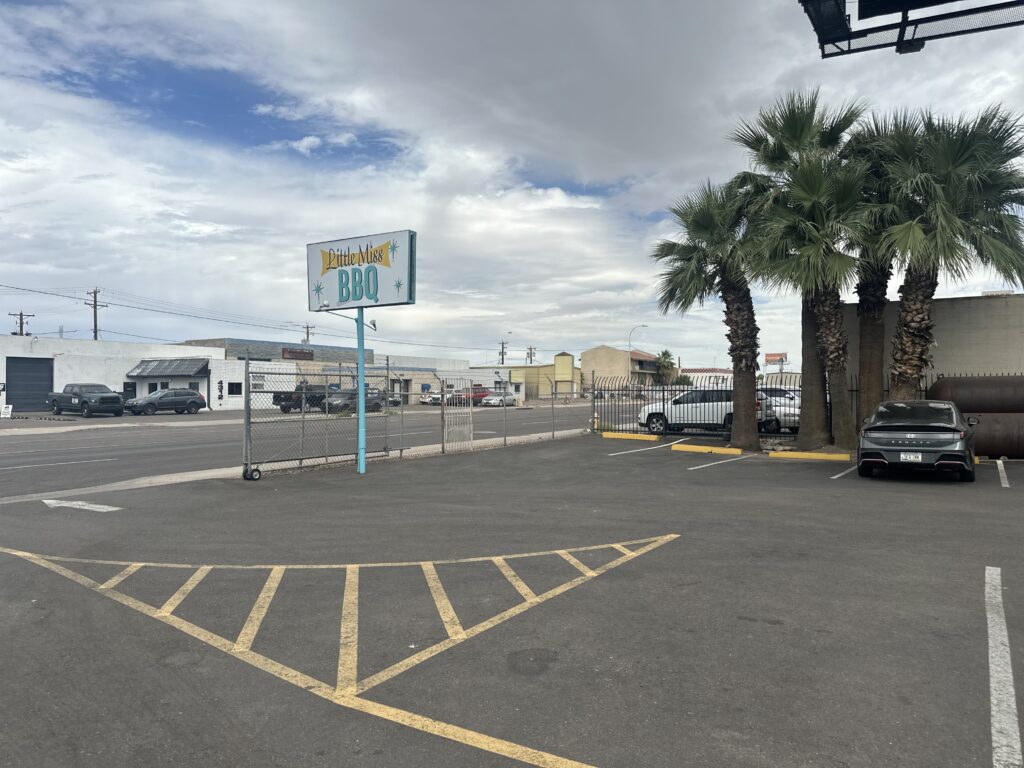
    Tom knows Phoenix. When I asked him where to eat, Little Miss BBQ came up before he even finished thinking. University Drive, he said. Not the other one. More seating.

    It was a clear Saturday morning, the kind Phoenix does effortlessly in April. A little breezy, comfortable. We walked in without a wait.

    The place is small. Five, maybe seven tables inside, a few outside. Wood-panelled walls, the kind that make a room feel like it has earned its years. The counter runs along the front with a narrow passageway where you order and move along, watching the meat being handled right in front of you. No theatre. Just the work.

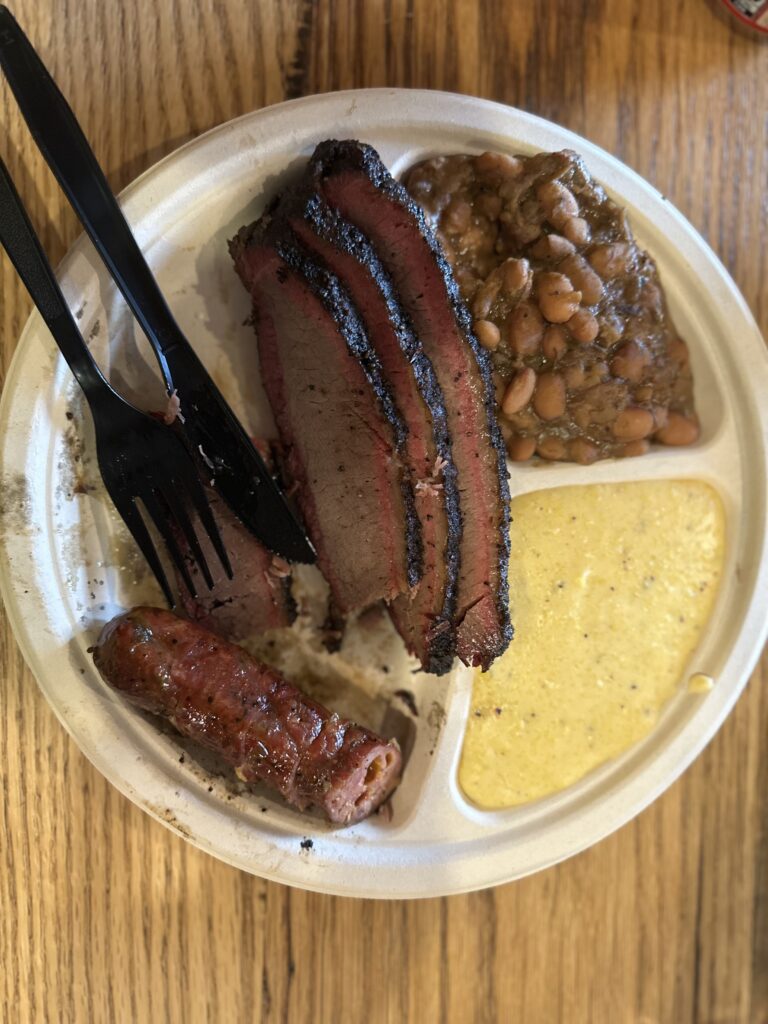
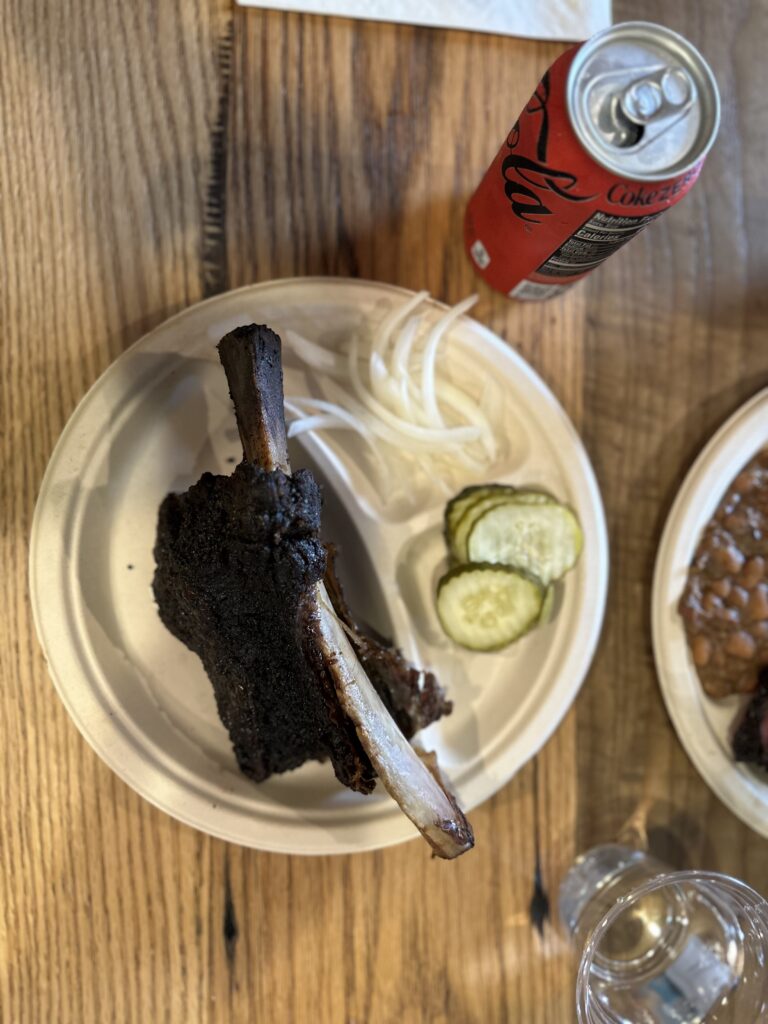
    We had already decided. Brisket, sausage, and the Saturday special — beef short ribs. When I hesitated for a moment at the counter, the man slicing the meat looked at me and said, you gotta do it. So we did.

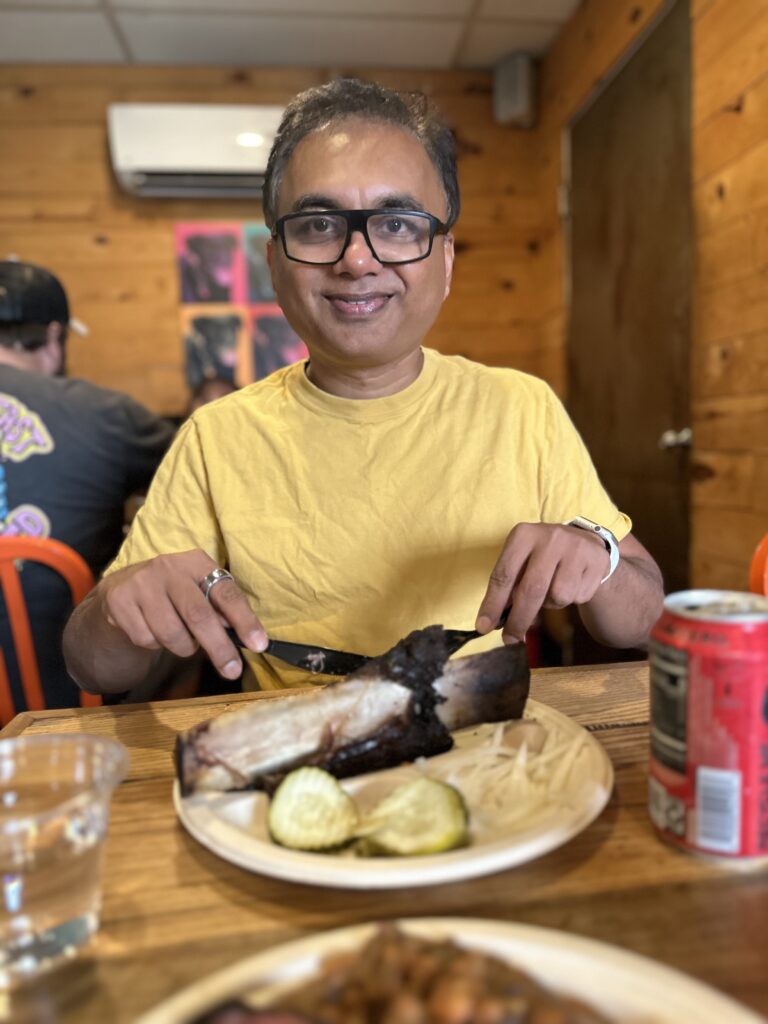
    He placed it on the cutting table between us. Three bones, a generous slab of meat, serious in a way that made you take it seriously too. I opted for the small size. He nodded and got to work.

    The short rib arrives looking like it has been through something. The outside is deeply dark, a crust that has absorbed hours of smoke. Nothing like charcoal. There is a hint of burnt, but just enough to tell you it has been through something. Not overdone. Not unappealing. You look at it and you know something has happened inside that you are about to find out.

    When you cut into it, the meat separates like fibers loosening after a long rest. There is a faint aroma, nothing aggressive. It does not announce itself.
    But the moment it touches your tongue, something shifts. Salt and fat land first, and before you have even decided how you feel about it, you are already chewing. And chewing. And then it is gone. Just like that.

    I mostly watched my son eat it. We were sharing, and there is something quietly satisfying about watching someone enjoy food you chose well. After some time, without quite planning to, we had finished the short ribs entirely. The brisket and sausage went home in a box.

    Tom was right. He usually is about these things.

  • The Money They Never Taught Us — Part 2: The Books They Never Assigned

    I did not pick up The Richest Man in Babylon because I was looking for financial wisdom. I was between books and wanted something light. Something that would not demand too much of me. A fable, I had heard. Short chapters. Ancient Babylon. That sounded easy enough. I was not prepared for what it would actually say.

    The Richest Man in Babylon was written in 1926 by George S. Clason. It reads like a collection of parables set in an ancient city, the kind of stories you might tell around a fire. Simple characters. Simple lessons. And yet I found myself reading slowly, not because it was difficult, but because I kept stopping to ask myself why nobody had ever said any of this to me before. The ideas were not complicated. They were just absent. Absent from school, absent from conversations, absent from everything I had been handed as I grew up.

    Rich Dad Poor Dad came to me differently. A friend recommended it years ago when I asked him about money and how he seemed to have figured something out that I had not. He did not hesitate. He named that book immediately. I noted it, the way you note things you fully intend to get to and somehow never do. Life moved on. The book sat somewhere in the back of my mind, patient, waiting. Then one day I was sitting with my own finances, turning things over, feeling the familiar unease of someone who earns but never quite gets ahead. And it came back to me. His voice, that easy confidence, the name of the book. I finally picked it up.

    Robert Kiyosaki writes very differently from Clason. There is nothing fable-like about it. He is direct, sometimes provocative, occasionally frustrating. But the thing that stopped me cold was not his arguments or his anecdotes. It was the diagrams. Simple little sketches that looked like they had been scribbled on a napkin. Boxes and arrows showing how money moves. A balance sheet. A profit and loss statement. An income statement. Concepts that accountants spend years mastering, laid out so plainly that you almost feel embarrassed it took this long to see them. That is the quiet genius of that book. It does not talk down to you. It just draws you a picture and lets you sit with what you are looking at.

    Underneath all of it is the same quiet accusation that Clason makes in his gentler way. That most of us were never taught how money actually works. That the system we grew up in was designed to produce workers and consumers, not people who understood wealth. That the gap between those who build financial security and those who don’t is not always about income. It is about knowledge that was never passed on.

    Two books. Two very different roads. The same destination. And I keep wondering how many people are still waiting to arrive.

    This is Part 2 of The Money They Never Taught Us. Click here for Part 1. https://nonaspensieve.com/the-money-they-never-taught-us-part-1-the-errand-boy-problem/

  • The Money They Never Taught Us — Part 1: The Errand Boy Problem

    When was the last time someone sat you down and taught you what to do with money? Not how to earn it. Not how to spend it carefully. But what to actually do with it, so it works for you instead of disappearing. Take a moment. Think about it. For most of us, the answer is never. And the strange part is, nobody noticed. Not our parents, not our teachers, not the adults who sent us on grocery runs and called it a lesson.

    I spent a good part of my childhood running errands. Grocery store. Market. Whatever needed fetching. Adults have a theory about this. Send a child on errands and they learn the value of money. They will count change. They will carry weight. They will understand that things cost something. And sure, I got good at arithmetic. I could add and subtract. I came back with the right items and the correct change. Mission accomplished. But here is what I did not learn. I did not learn that money could grow. I did not learn the difference between spending and investing. I did not learn that the purpose of earning is not just to spend more efficiently. Nobody handed me a list that said: here is how money actually works. Here is what the people who have it know, that the people who don’t, were never told. I was being trained to be a very reliable consumer.

    The two books I read recently, The Richest Man in Babylon and Rich Dad Poor Dad, made me quietly furious. Not because they were bad. Because they were so good. Because the ideas in them are not complicated. Because a child could understand them. Because nobody told me any of this when I was a child. One book was written in 1926. The other in 1997. Between them they have sold hundreds of millions of copies. And yet here we are, generation after generation, still sending children to the shop and calling it financial education.

    I don’t say this to blame anyone. The adults in your life probably did what they knew. We pass down what we were given. But I keep coming back to one question. What exactly were we given?

  • Rocks, Ridges, and a New Tribe

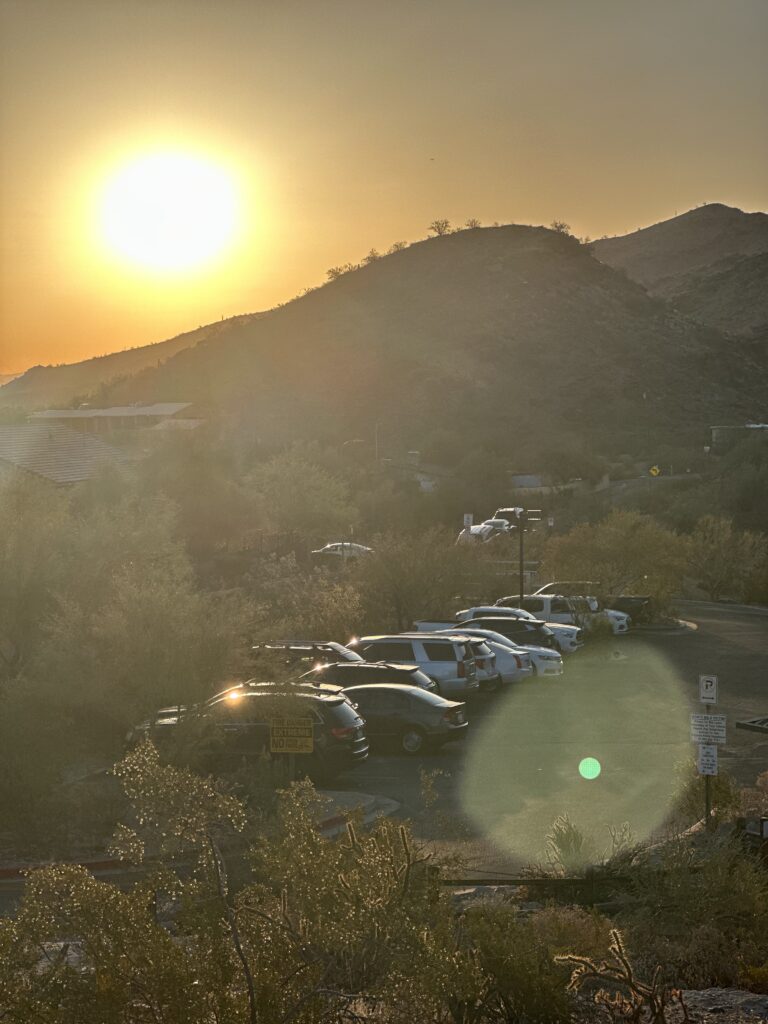
    I was at the trailhead at 5:45 am. Got parking. The group arrived after 6 and the lot was already full. They parked on the road.

    That sunrise from the parking lot. Worth the early alarm by itself.

    We started at 6:15. Ten of us. Strangers, mostly. The kind of group where you don’t know anyone’s last name but you’re about to spend two hours sweating together on a mountain. That counts for something.

    Except we didn’t quite sweat together.

    The initial climb is steep. No easing into it. The trail just goes up and keeps going up. And that’s where the group of ten quietly fell apart. Different paces, different lungs. By the time the climb leveled off, we were already in small clusters scattered across the trail. So much for the group hike.

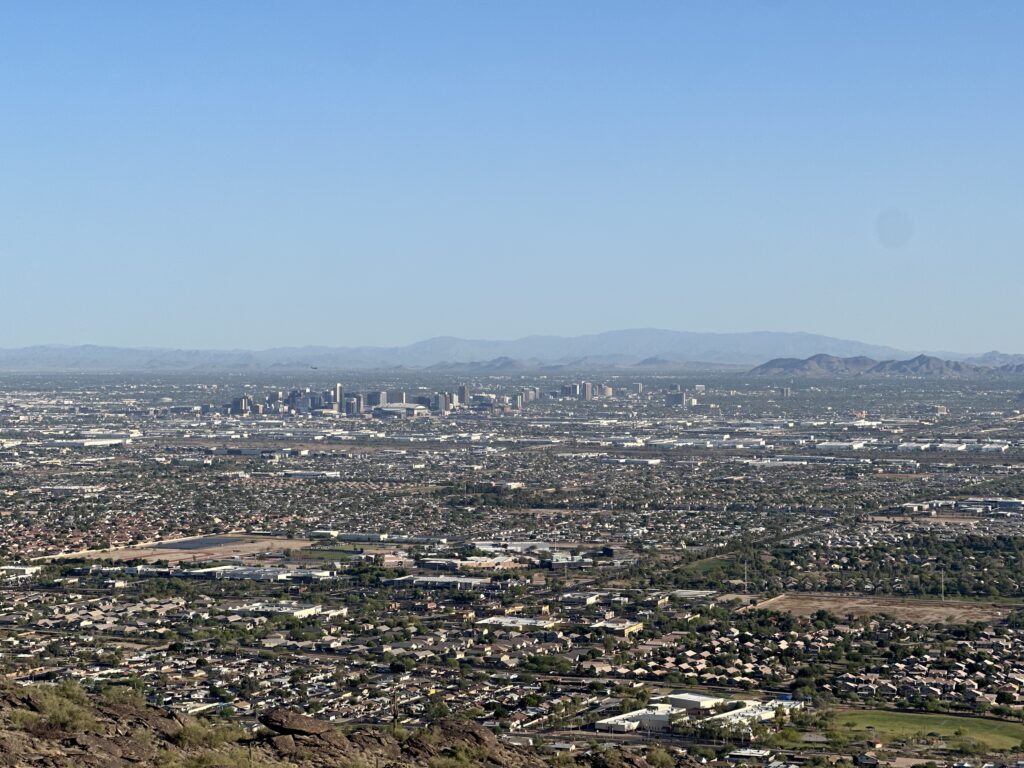
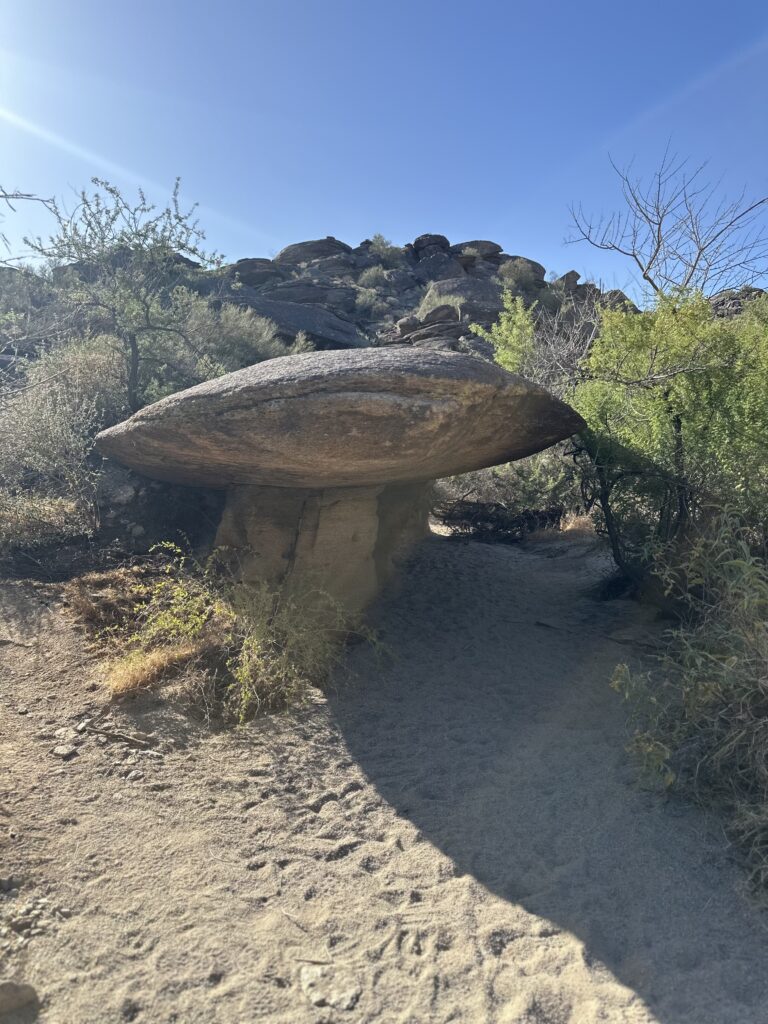
    Somewhere around the middle, a few of us broke away and scrambled up a small hill. That’s where Phoenix opened up below us. The whole city just sitting there, quiet and spread out. Worth every extra step.

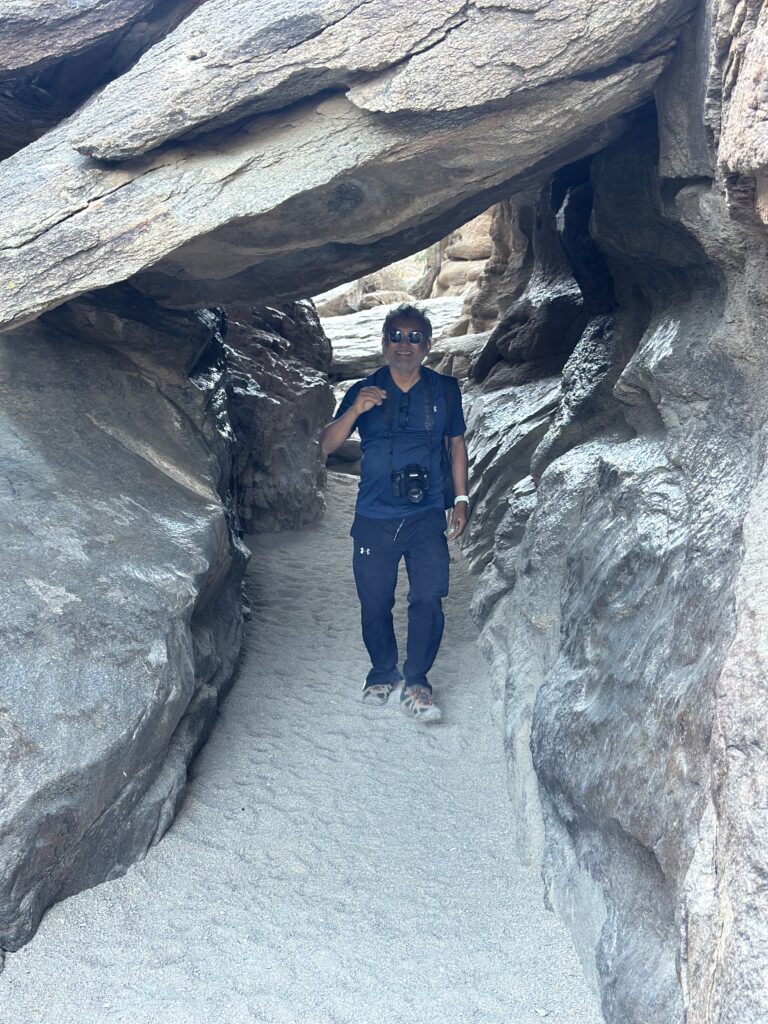
    Then the rocks. There’s a narrow passage where you have to turn sideways and squeeze through. My fellow hikers found that very entertaining. They made sure to get it on video. There were other spots where you had to actually get down and crawl. Full commitment.

    Two hours not counting breaks and photo ops. Good two hours.

  • The Monitor

    COVID sent everyone home. For the first time in my working life, I had to think about where I worked. Not just when or how, but where. The options were not inspiring. The kitchen table. The couch. The bed, which was already occupied and not entirely available.

    I gave it about a week. Then I made a decision. If I was going to work from home, I was going to work properly. I spent around three hundred dollars. A chair. A small plastic table. And a monitor that connected to my laptop.

    Suddenly I had two screens. The laptop for sharing my screen on calls, the monitor for everything I actually needed to work on. I could present from the laptop while working quietly on the monitor. Documents, spreadsheets, notes, all visible to me while the call saw only what I wanted them to see. I became the person people asked to share their screen because I had the setup to do it cleanly.

    Three hundred dollars changed how I worked every day.

    A colleague of mine was struggling. Capable person, responsible, good at his job. But every time he had to share his screen on a call it became an ordeal. He had multiple windows open across different applications. He would share one and the moment the conversation moved to data sitting somewhere else, he had to stop the share, navigate to the other application, and start sharing again. Every switch was a small interruption. Every interruption broke the flow of the conversation. It was painful to watch because the solution was so simple.

    I suggested he get a monitor. I told him it would make his life easier. I meant it genuinely. I had seen what it did for me and I thought he would see the same.
    He told me the organisation should buy it for him.

    I thought about pushing back. I thought about saying that the money was not very much for something that would make every working day better. I thought about making the case more strongly.

    But I looked at how certain he was. How completely settled he was in his position. And I let it go.

    Some people see a small problem and fix it. Some people see a small problem and wait for someone else to fix it. I do not think either group fully understands the other.

    My colleague never got the monitor. I do not know if he ever struggled less.

  • One Lens. No Excuses.

    A friend of mine is a serious photographer. Or was. He invested heavily over the years, good cameras, multiple lenses, equipment that most hobbyists would envy. It is all stored away safely now. He regrets not pursuing the hobby more actively. The technology moved on, he tells me. Mirrorless cameras replaced DSLRs. Metal lenses arrived. What he has feels dated. And so the cameras sit.

    I understood that feeling more than I admitted.

    A couple of years ago I went out shooting with a group of bird photographers. Bird photography is a different discipline. It requires telephoto zoom lenses, the kind that let you observe a bird at a distance and fill the frame with it at full length. These photographers had serious equipment. Long, heavy lenses that meant business.

    My lenses had zoom capability. Just not like anything they were carrying.
    I got intimidated. Not by the photographers themselves. They were generous and welcoming. But by the gap between what they had and what I had. I started worrying that I would eventually feel compelled to spend money I did not want to spend just to keep up. So I quietly stopped going out with them.

    That was the wrong decision. But it took me a while to see it.

    A few weeks ago I picked up the camera again and made a deliberate choice. I had been carrying three lenses every time I went out. The constant switching between them was a distraction, always wondering if I had the right one on, always second guessing. So I decided to carry just one.

    A prime lens. 85mm.

    A prime lens does not zoom. If you want to get closer to your subject, you move your feet. That is the only option. It sounds like a limitation and it is. But limitations have a way of focusing the mind.

    In downtown Phoenix, shooting with just the 85mm, I got some shots wrong. Angles I misjudged. Distances I miscalculated. But I was thinking differently, about composition, about where I was standing, about how I was relating to the subject rather than just adjusting a lens to compensate.

    When I messaged my friend about it, he was happy. Happy that I was picking up the camera again. Happy that I was writing again too. His cameras are still stored away. But something in the conversation felt like a small door opening.

    You do not need the perfect equipment to pursue what you love. You need the one lens you already have and the willingness to move your feet.

    Constraints do not limit you. They teach you.

  • The Lone Photographer in Downtown Phoenix

    In Paris, I picked up a camera. The city made it easy. There were groups, there were streets made for wandering, there were a hundred reasons to point a lens at something beautiful or strange. After Paris, life got in the way. The UK came and went. The camera stayed but the outings did not.

    I have become more reserved over the years. Not just with people. With cameras too. Street photography is an intimate act. You are capturing someone’s life without asking. The privacy of strangers weighs on me in a way it did not when I was younger and less aware of such things.

    In Phoenix there is a group that does this. The timings never work for me. So one evening I decided to go alone. Just me and the camera in downtown Phoenix during golden hour.

    The first few minutes were uncomfortable. That particular apprehension of standing on a street with a camera, wondering if you have any right to be there. And then I started shooting. And I forgot everything else.

    Two things happened that I did not expect.

    The first was a man pulling a collapsible wagon across the road. I spotted him from a distance and waited, the way street photographers do, for him to enter the frame just right. I looked through the viewfinder. Nothing. I looked up. He was walking directly towards me.

    “What did you shoot?” he asked.

    “Nothing,” I said. “I was planning to take your picture but you walked towards me.”

    He laughed. We both did.

    The second was during golden hour. A person walking into the light, the kind of silhouette that makes you hold your breath. I was about to press the shutter when someone appeared at my elbow and showed me his phone screen. He had taken the same shot. We stood there comparing what we each saw in the same light. Smiles. A brief conversation. Two strangers on a street with cameras and nothing else in common.

    The passersby smiled too. Encouraging, unhurried smiles.

    I went out worried about intruding on people’s lives. I came back having connected with them instead.

    I should not have stopped doing street photography.

  • Booting up. Again.

    In January 2009, I wrote my first post on Nona’s Pensieve. I called it “Booting up.” It felt like a big deal then, finding the time and the courage to write.

    A lot has happened since.

    I wrote through 2009, through the years that followed, through different cities and different versions of myself. Somewhere along the way I tried to monetize it. I watched the views. When the money did not come and the views did not grow, I got worried. Then distracted. Then I stopped.

    That is the truth.

    Life felt different without writing. I did not expect that.

    So here I am. Booting up again. Same name, new home. No monetization. No obsessing over views. Just writing on my own space, at my own pace, about whatever catches my attention.

    It would be nice if you read it. It would be lovely if you commented. But that is not why I am here.

    I am here because I missed this.