Author: ndinamoni@gmail.com

  • The Layer Nobody Was Looking At

    Sometimes the most consequential problems don’t announce themselves. They show up disguised as routine questions.

    I was in a room once where a pricing conversation had everyone’s attention. A contract model was being renegotiated and the new structure came back more expensive than the existing one. The instinct in the room was immediate: bring the number down. That is a reasonable instinct. Except the existing model had years of hidden costs quietly folded into it. The new structure was pricing something the old one was absorbing invisibly. You cannot compare them directly.

    But the bigger question nobody was asking was why the customer wanted to renegotiate at all if they were already getting a good deal.

    The answer had nothing to do with money. Something had shifted in the relationship. Trust had quietly eroded. The customer was trying to regain control of a narrative that had started to look bad on their side. The new contract structure was not about cost. It was about credibility.

    The room was solving a pricing problem. The real problem was running on a completely different layer.

    Then there was a different conversation. A routine check on a delay. Someone explaining what went wrong. The short version: a chain of people had each done their job correctly against the wrong starting point. By the time the error surfaced, a fix was already underway. Fast, competent, impressive. But in the focus on fixing, one thing had been missed. The people who needed to know, didn’t.

    One question changed the temperature of that conversation: who knows about this?

    The answer revealed the real problem. The fix was on track. The exposure wasn’t. Someone senior was one phone call away from hearing about a problem they had never been told existed. That is a different kind of risk, and it had nothing to do with the technical layer everyone was working on.

    Both situations had something in common. The problem everyone was solving was not the real problem. The real problem was running on a layer nobody was looking at. In the first story it was trust and perception. In the second it was escalation and exposure. Nobody was incompetent. Nobody was malicious. They were solving what they could see.

    Edward de Bono saw the same pattern and built a framework around it. Six thinking hats, structured, deliberate, designed to pull you out of your default perspective. It works. But a framework asks you to stop and think. A layer does not wait. It is already moving while you are in the room. You do not get to call a timeout and put on a hat. You either see it or you don’t.

    The hats teach you to look. Experience teaches you to see.

    I don’t have a checklist for this. I am not sure one exists. But there is one question worth asking quietly, before any move, in any room.

    What am I not seeing right now?

  • The Money They Never Taught Us — Part 5: What We Teach Kids Instead

    Think back to the child running errands. The one sent to the grocery store with a list and exact change. The one who came back with everything accounted for, mission accomplished, having learned nothing about money except how to move it from one hand to another. That child was me. That child was probably you. That child is, in many homes, still being produced today.

    We mean well. That is the part that makes this complicated. The adults who sent us on those runs were not negligent. They were passing down what they had been given. The belief that proximity to transactions teaches financial sense. That counting change builds money wisdom. That carrying the weight of grocery bags somehow prepares a child for the weight of financial decisions. It does not. It never did. It just felt like it should.

    What we actually teach children when we send them on errands is compliance and execution. Go here, buy this, come back with the correct change. These are useful life skills. They are not financial ones. A child who has run a thousand errands still does not know what an asset is. Still does not know why saving a portion of whatever they receive matters. Still does not understand that money left to grow quietly over time becomes something entirely different from money spent the moment it arrives.

    The knowledge is not complicated. We have established that now. Two books, both of them decades old, laid it out plainly enough for anyone to understand. A portion of all you earn is yours to keep. Money has the ability to work for you if you let it. The difference between spending and investing is the difference between a life spent running errands for money and a life where money eventually runs some errands for you.

    This is teachable. It is teachable to children. It does not require a finance degree or a sophisticated vocabulary. It requires someone who knows it to sit down and say it out loud.

    So here is the question I want to leave you with. Not a rhetorical one. A real one. You have children, or you will, or you know some. You now know things about money that nobody taught you when you were young. Things that took you years and two books and a certain amount of quiet frustration to finally understand. What are you going to do with that? What will you teach them? And more importantly, when will you start?

    The errand can wait.

    This is Part 5 of The Money They Never Taught Us. Click here for Part 4. https://nonaspensieve.com/the-money-they-never-taught-us-part-4-the-first-rule/

  • Granny Smith

    I did not know my mother loved sweet things until I was well into adulthood. You would think that growing up in the same house would teach you everything about a person. It does not. Children are too busy growing up to notice the people around them properly.

    It took a fridge to tell me.

    I cannot remember exactly when it was. Sometime after I got married, after the children arrived, during one of those visits home. I opened the fridge looking for something and found a quiet stack of sweets tucked away inside. My mother’s private reserve. Someone pointed it out to me. I might not have even seen it on my own.

    That was the moment I realised. She had always loved sweetness. I had simply never been paying attention.

    Then came the diabetes diagnosis. Late in life, as these things sometimes arrive. And with it, the conversations about what she can eat and what she cannot. About managing levels and making adjustments to a lifetime of preferences.

    I called her recently. Long distance, the way most of our conversations happen now. I had done my research. I knew what I wanted to say.

    I started with the easy ones. The vegetables she could eat freely. The fruits that would not spike her levels. I explained which ones were safe, which ones to avoid, how to think about portions. She listened. Or at least she did not interrupt, which with my mother amounts to the same thing.

    I was feeling confident. I had saved the best for last.

    Granny Smith apples, I told her. Low sugar. Good for blood sugar control. A smart choice.

    She did not pause. She did not consider. She did not ask what a Granny Smith was or where to find one. Before I had finished the sentence she said:
    “It is very sour.”

    That was it. The research. The careful list. The gentle persuasion. All of it met with four words delivered without a moment’s hesitation.

    It is very sour.

    I smiled. In that one quick sentence was everything. A whole life that had chosen sweetness at every turn, now being asked to make peace with sour. And her answer was not angry or resigned. It was just honest. The way only mothers can be.

    I did not push the Granny Smith apple any further that day.

  • The Money They Never Taught Us — Part 4: The First Rule

    Of all the things the books taught me, this one should have been the most obvious. It is simple enough to fit in three words. Pay yourself first. Before the rent, before the groceries, before every obligation that lines up at the door the moment a salary lands, you set something aside for yourself. Not what is left over at the end of the month. Not whatever survives the bills. First. From the top. Before anything else gets a claim on it.

    It sounds reasonable. It sounds like something an adult should have mentioned at some point. And yet for most of us, the order was always reversed. We paid everything and everyone else and then looked at what remained. Which was usually very little. And we called that saving.

    The Richest Man in Babylon puts it plainly. A portion of all you earn is yours to keep. Not most of it. Not all of it. Just a portion, set aside with discipline and consistency, before the rest of life gets to it. The book suggests a tenth. The specific number matters less than the habit. What matters is that it happens first, every time, without negotiation.

    On its own, this is a good discipline. But it is what happens next that changes everything.

    Money that is set aside and left alone does not just sit there. It grows. And then it grows on its growth. This is compounding, and both books treat it with a reverence that starts to make sense the longer you think about it. The reason compounding is so powerful is not because the numbers are dramatic in the short term. In the short term they are almost unimpressive. It is over time that the picture shifts. A small amount set aside early and left undisturbed will eventually outgrow a much larger amount set aside late. Time is the ingredient that most of us were never told we were wasting.

    This is why starting matters more than the amount. This is why the first rule is not about how much you earn. It is about what you do, consistently and early, with a portion of whatever you earn. The math is patient. It will wait. But it rewards the people who understood the rule and the people who discovered it late in very different ways.

    We were never taught this. We were taught to earn and to spend and to hope that something would be left. Nobody told us that the sequence was the whole point.

    This is Part 4 of The Money They Never Taught Us. Click here for Part 3. https://nonaspensieve.com/the-money-they-never-taught-us-part-3-income-is-not-wealth/

  • Pappettan on the organized life

    Everyone has a system for work. Or at least they think they do. What is more interesting is what happens outside of work. Recently, I finally got my calendar right and was telling Pappettan about it one afternoon.

    Me: proudly Color-coded. Blue for client meetings. Green for internal reviews. Yellow for focus work. Every hour accounted for. The chaos came down. I was happy.

    Pappettan: listening

    Then he noticed I was watching the clock.

    Pappettan: You need to leave?

    Me: already gathering my things Yes. I have to figure out dinner. I have no idea what is in the fridge. And I still have to run to the grocery store.

    Pappettan: What time is dinner?

    Me: I don’t know yet.

    Pappettan: Who decides?

    Me: I do. Usually.

    Pappettan: And the groceries. Same time every week?

    Me: after a pause Whenever I remember.

    Pappettan: nodding slowly You solved the chaos at work. Why didn’t you use some of these methods to solve the chaos at home?

    I had no answer to that.

  • The Money They Never Taught Us — Part 3: Income Is Not Wealth

    There is a version of success that most of us were sold very early. Study hard, get a good job, earn a good salary. That was the complete picture. Nobody added a next chapter. Nobody said what comes after the salary. We were handed a destination and told that arriving was enough.

    So we arrived. Many of us did exactly what we were supposed to do. We got the job. We earned the income. And then we looked around and noticed something uncomfortable. The money came in and the money went out and at the end of the month the distance between where we were and where we wanted to be had not changed very much. We were moving but somehow not going anywhere.

    This is the part that income alone cannot fix. Because income and wealth are not the same thing, even though we use them almost interchangeably. Income is what flows in. Wealth is what stays. And most of us were only ever taught to manage the flow, not to build something that remains.

    The confusion runs deep because the visible markers of a good life cost money. A decent home. A reliable car. Children in good schools. A holiday once in a while. These things are not unreasonable. But they consume income completely if you are not paying attention. And most of us were never taught what paying attention actually looks like. We knew how to spend carefully. We did not know how to think about what we were building, or whether we were building anything at all.

    The books I mentioned in the last post both circle this idea from different directions. One uses ancient parables, the other uses those napkin sketches. But they are pointing at the same thing. That without understanding what money does when it is not being spent, you can earn your entire life and still arrive at the end of it with very little to show. Not because you were careless. But because nobody told you there was another way to think about it.

    We were taught to earn. We were not taught to accumulate. And those are two very different educations.

    This is Part 3 of The Money They Never Taught Us. Click here for Part 2. https://nonaspensieve.com/the-money-they-never-taught-us-part-2-the-books-they-never-assigned/

  • One at a Time

    I went to Butcher Jones Trail to hike. The camera came along, as it usually does.

    There were wildflowers everywhere on the trail. But every time I raised the camera, I found myself pointing at one.

    Not a cluster. Not a field. One stem, standing a little taller than everything around it, doing nothing in particular except existing in the right light at the right moment.

    I did not plan that. The trail decided it.

    I have noticed this before. You go somewhere expecting abundance and what stops you is always the singular thing. The one that separated itself from the rest without trying. The one that made you slow down.

    I took several frames that day. Most of them are some version of this. One flower, soft world behind it, a thin stem holding everything up.

    I am not sure what that says about me. But I think it says something.

  • Little Miss BBQ. Saturday. Short Ribs.

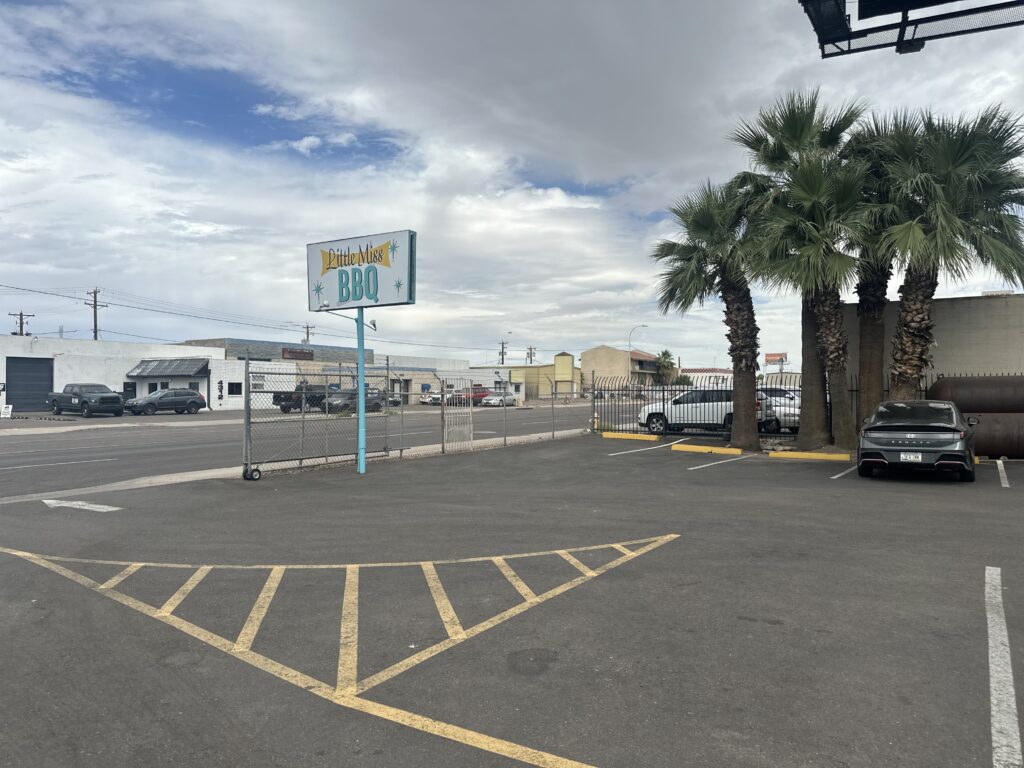
    Tom knows Phoenix. When I asked him where to eat, Little Miss BBQ came up before he even finished thinking. University Drive, he said. Not the other one. More seating.

    It was a clear Saturday morning, the kind Phoenix does effortlessly in April. A little breezy, comfortable. We walked in without a wait.

    The place is small. Five, maybe seven tables inside, a few outside. Wood-panelled walls, the kind that make a room feel like it has earned its years. The counter runs along the front with a narrow passageway where you order and move along, watching the meat being handled right in front of you. No theatre. Just the work.

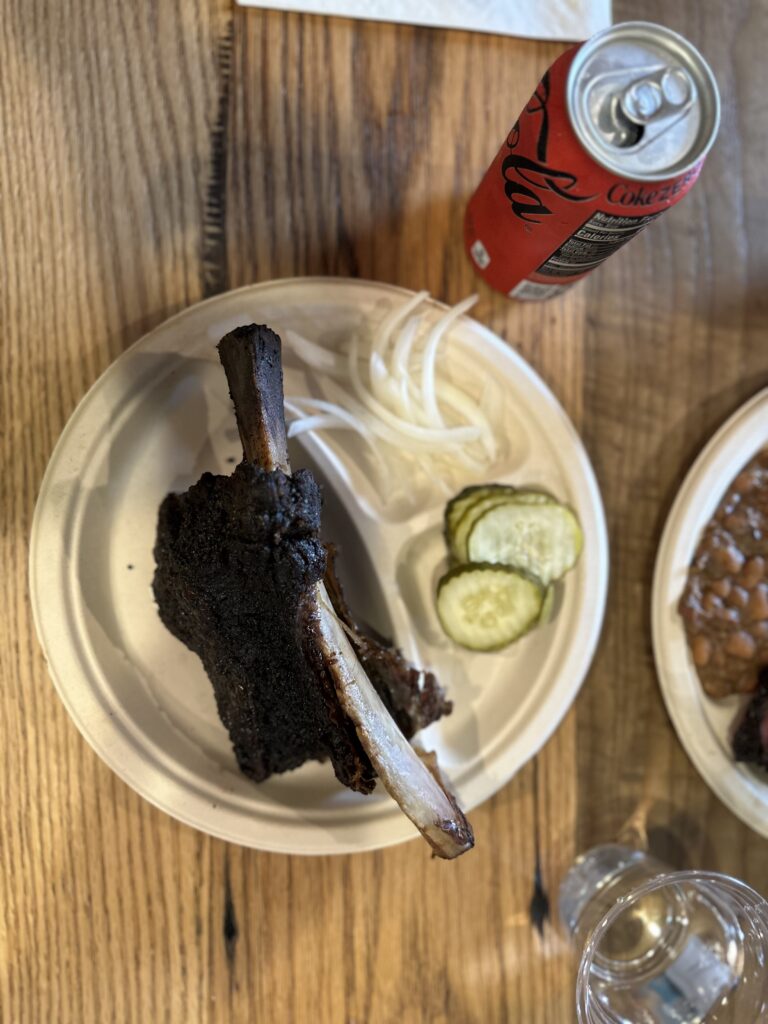
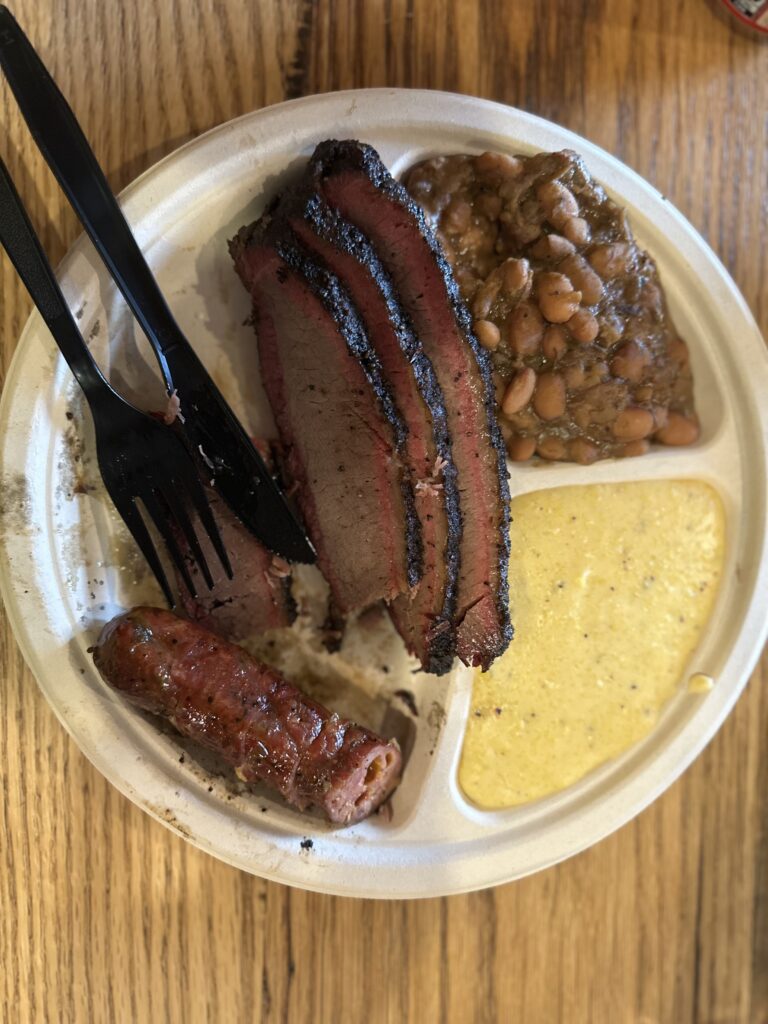
    We had already decided. Brisket, sausage, and the Saturday special — beef short ribs. When I hesitated for a moment at the counter, the man slicing the meat looked at me and said, you gotta do it. So we did.

    He placed it on the cutting table between us. Three bones, a generous slab of meat, serious in a way that made you take it seriously too. I opted for the small size. He nodded and got to work.

    The short rib arrives looking like it has been through something. The outside is deeply dark, a crust that has absorbed hours of smoke. Nothing like charcoal. There is a hint of burnt, but just enough to tell you it has been through something. Not overdone. Not unappealing. You look at it and you know something has happened inside that you are about to find out.

    When you cut into it, the meat separates like fibers loosening after a long rest. There is a faint aroma, nothing aggressive. It does not announce itself.
    But the moment it touches your tongue, something shifts. Salt and fat land first, and before you have even decided how you feel about it, you are already chewing. And chewing. And then it is gone. Just like that.

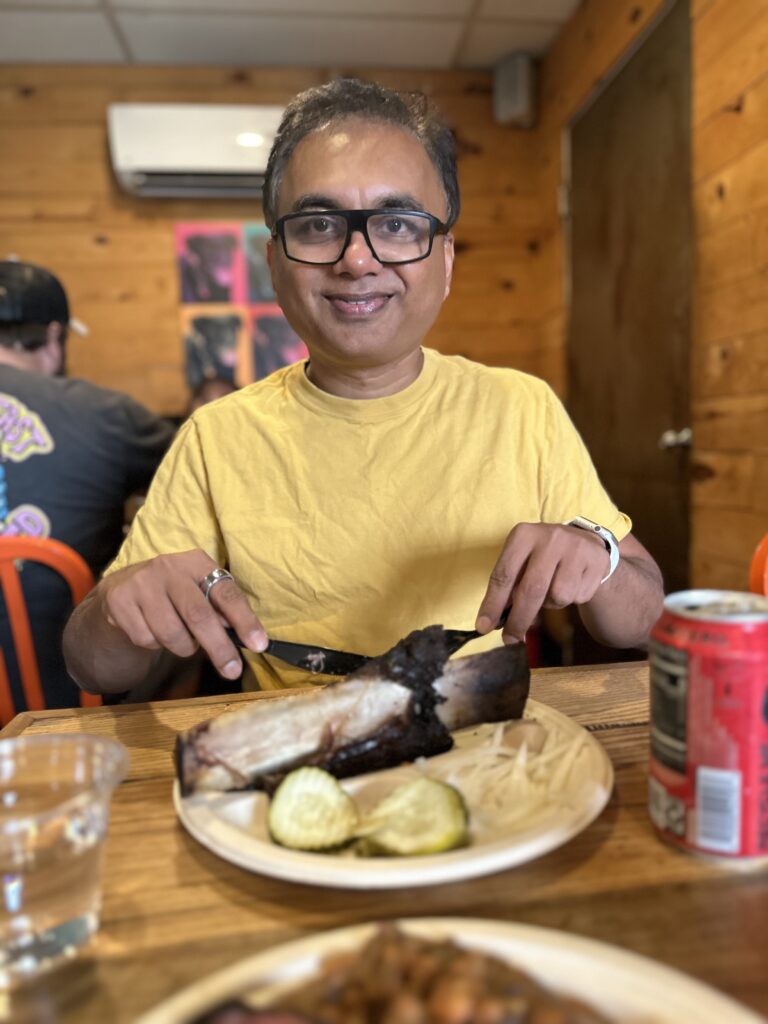
    I mostly watched my son eat it. We were sharing, and there is something quietly satisfying about watching someone enjoy food you chose well. After some time, without quite planning to, we had finished the short ribs entirely. The brisket and sausage went home in a box.

    Tom was right. He usually is about these things.

  • The Money They Never Taught Us — Part 2: The Books They Never Assigned

    I did not pick up The Richest Man in Babylon because I was looking for financial wisdom. I was between books and wanted something light. Something that would not demand too much of me. A fable, I had heard. Short chapters. Ancient Babylon. That sounded easy enough. I was not prepared for what it would actually say.

    The Richest Man in Babylon was written in 1926 by George S. Clason. It reads like a collection of parables set in an ancient city, the kind of stories you might tell around a fire. Simple characters. Simple lessons. And yet I found myself reading slowly, not because it was difficult, but because I kept stopping to ask myself why nobody had ever said any of this to me before. The ideas were not complicated. They were just absent. Absent from school, absent from conversations, absent from everything I had been handed as I grew up.

    Rich Dad Poor Dad came to me differently. A friend recommended it years ago when I asked him about money and how he seemed to have figured something out that I had not. He did not hesitate. He named that book immediately. I noted it, the way you note things you fully intend to get to and somehow never do. Life moved on. The book sat somewhere in the back of my mind, patient, waiting. Then one day I was sitting with my own finances, turning things over, feeling the familiar unease of someone who earns but never quite gets ahead. And it came back to me. His voice, that easy confidence, the name of the book. I finally picked it up.

    Robert Kiyosaki writes very differently from Clason. There is nothing fable-like about it. He is direct, sometimes provocative, occasionally frustrating. But the thing that stopped me cold was not his arguments or his anecdotes. It was the diagrams. Simple little sketches that looked like they had been scribbled on a napkin. Boxes and arrows showing how money moves. A balance sheet. A profit and loss statement. An income statement. Concepts that accountants spend years mastering, laid out so plainly that you almost feel embarrassed it took this long to see them. That is the quiet genius of that book. It does not talk down to you. It just draws you a picture and lets you sit with what you are looking at.

    Underneath all of it is the same quiet accusation that Clason makes in his gentler way. That most of us were never taught how money actually works. That the system we grew up in was designed to produce workers and consumers, not people who understood wealth. That the gap between those who build financial security and those who don’t is not always about income. It is about knowledge that was never passed on.

    Two books. Two very different roads. The same destination. And I keep wondering how many people are still waiting to arrive.

    This is Part 2 of The Money They Never Taught Us. Click here for Part 1. https://nonaspensieve.com/the-money-they-never-taught-us-part-1-the-errand-boy-problem/

  • Pappettan on supply and demand

    I have always suspected that a popular Mexican fast food chain is mismanaged. The kind where you watch them assemble your meal in front of you, ingredient by ingredient. The lines are always long. The wait is always uncertain. I have never understood why a place so popular cannot get its operations right.


    Last week, my daughter wanted chicken. Pappettan and I walked in to get it for her. The staff told us there would be a fifteen minute wait. They had run out of chicken. No explanation beyond that. We chose to wait outside.

    When we walked back in, there was a long line at the counter. It took me a moment to understand what had happened. We had chosen to wait outside. Others had walked in after us and queued ahead of us. What had started as a chicken shortage had become, from the outside, the appearance of a restaurant in high demand.

    I was not pleased.

    Me: irritated This is mismanagement. They ran out of chicken. That is it. And now look at that line.

    Pappettan: looking at the line Yes. Look at that line.

    Me: exasperated People walking in think this place is popular. It is not demand. It is a shortage.

    Pappettan: nodding And yet the line is there.

    Me: frustrated Because of a mistake!

    Pappettan: calmly But the customers are still waiting.

    Me: thrown off Well… yes.

    Pappettan: turns to me So they created a shortage. The customers waited. The line formed. And now everyone walking in thinks this is the place to be.

    Me: slowly That was not intentional.

    Pappettan: shrugs Does it matter?

    I had no answer to that. Somewhere in that exchange, mismanagement had become a masterclass in supply and demand. I am still not sure how I feel about that.